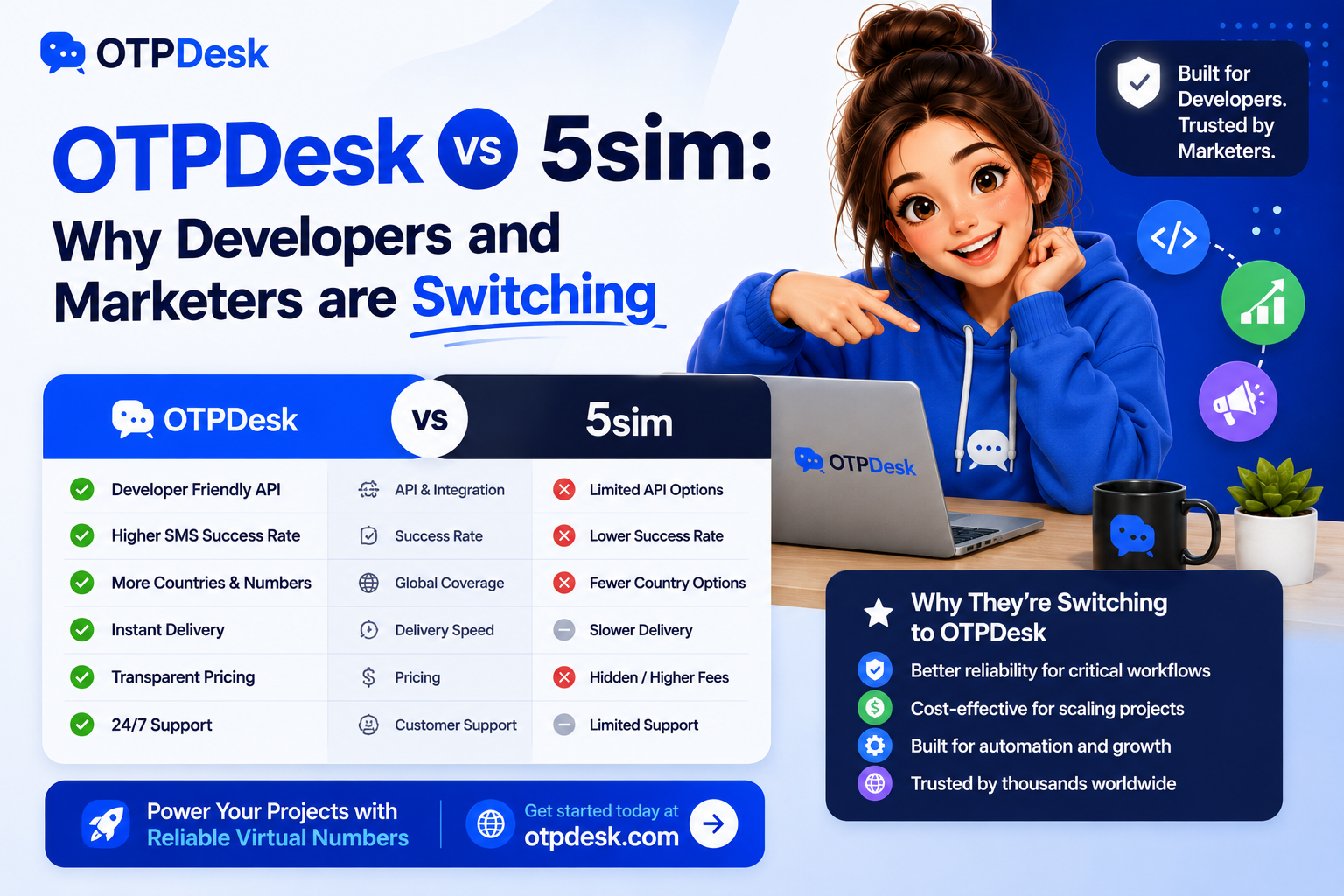
The Virtual Number Market Shift
For years, 5sim dominated the low-cost virtual number market. But scaling an agency or automated script on their platform has become increasingly difficult. High failure rates and slow support have pushed developers to look for 5sim alternatives.
Let's look at the hard data on why OTPDesk is capturing the high-volume developer market in 2026.
Success Rates and Number Quality
The core difference between the platforms lies in their number sourcing.
5sim: They aggregate numbers from hundreds of third-party vendors. While this ensures massive country coverage, quality control is practically non-existent. You will often purchase numbers that are already banned on WhatsApp or flagged by Google.
OTPDesk: We operate direct physical SIM farms. By maintaining tight control over the hardware, we ensure numbers are fresh and have never been blacklisted by major tech companies. This drives our SMS success rate above 92% on first attempts.
API Architecture and Speed
If you are building an automated registration bot, API latency will bottleneck your entire operation.
- 5sim API: Developers often report server timeouts during peak hours. Their polling endpoints can take up to 2 minutes to return an SMS string.
- OTPDesk API: Built on a modern Redis-backed architecture, our endpoints respond in under 50ms. As soon as the carrier delivers the SMS to our hardware, it is instantly available via our API.
The Verdict
If you only need a single number for a low-tier forum, 5sim works fine. But if your business relies on creating high-trust accounts on WhatsApp, Telegram, or Gmail at scale, the failed verifications on 5sim will cost you more in lost time than you save on cheaper numbers. Switch to OTPDesk for reliability and speed.